Is Smoking Weed a Sin in the Bible? A Clear, Biblical Answer
The Bible does not mention marijuana by name, but it gives clear guidance through its teaching on sobriety, self-control, stewardship, law, conscience, and Christian freedom. Recreational intoxication conflicts with those principles, while medical use requires careful, honest discernment.
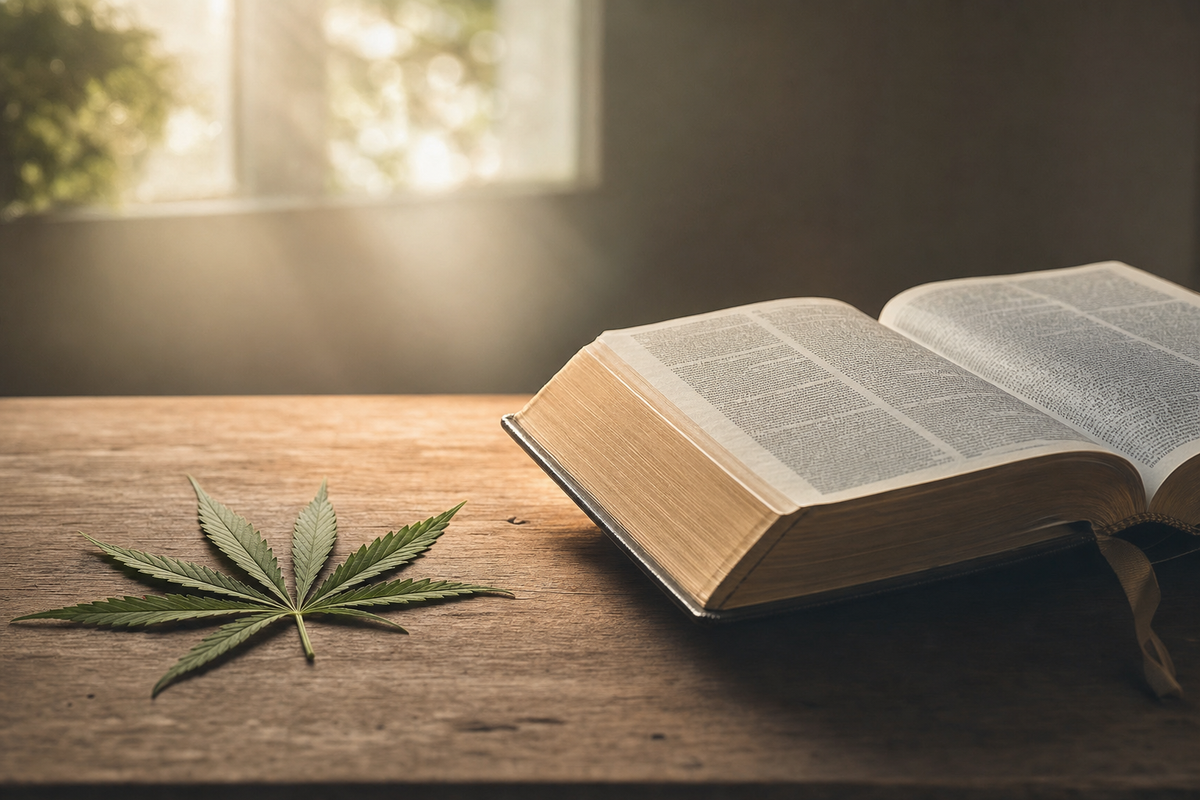
The Bible never directly mentions marijuana, cannabis, or smoking weed. That means there is no verse that simply says, “You shall not smoke marijuana.” Yet Scripture gives clear and sufficient principles for evaluating it. The important question is not merely whether cannabis appears by name in the Bible, but whether using it is consistent with sobriety, self-control, stewardship, obedience, love for others, and a life directed by the Holy Spirit.
For most people, “smoking weed” refers to recreational use for the purpose of getting high. In that situation, the biblical concerns are serious. Deliberately impairing the mind for pleasure is difficult to reconcile with the repeated command to remain sober-minded and self-controlled. At the same time, questions involving medically supervised cannabis, non-intoxicating products, legal restrictions, and addiction require careful distinctions rather than careless condemnation.
So, is smoking weed a sin in the Bible? Recreational marijuana use that seeks intoxication, compromises self-control, breaks the law, harms the body, or begins to master a person should be regarded as sinful. Scripture also calls us to examine more than the substance itself. God cares about our motives, our freedom, our influence on others, and whether we can receive our choices with a clear conscience before him.
The Bible’s Call to Sobriety
One of the clearest biblical principles is the call to remain sober-minded. Peter writes, “Be sober-minded; be watchful. Your adversary the devil prowls around like a roaring lion, seeking someone to devour” (1 Peter 5:8). Paul likewise urges believers not to spiritually sleep but to remain awake and sober (1 Thessalonians 5:6–8).
In these passages, sobriety includes more than avoiding a particular chemical. It describes spiritual alertness, sound judgment, and readiness to recognize temptation. Christians are called to live with minds prepared for faithful obedience rather than intentionally clouded for escape or pleasure.
The Bible speaks most directly about intoxication through its teaching on alcohol. Scripture does not treat every use of wine as sinful, but it repeatedly condemns drunkenness. Paul writes, “And do not get drunk with wine, for that is debauchery, but be filled with the Spirit” (Ephesians 5:18). The contrast is significant. A believer should not surrender control to an intoxicating substance but should increasingly live under the influence and direction of the Holy Spirit.
Marijuana and alcohol are not identical, and the Bible does not give us a chart comparing their effects. Still, the principle applies. If a person uses marijuana specifically to become high, mentally altered, or detached from reality, the desired result is impairment. The fact that the substance is not named in Scripture does not remove the biblical concern.
This is why asking, “How much can I use before it becomes sinful?” may begin in the wrong place. A more searching question is, “Why do I want this effect, and does pursuing it help me remain watchful, self-controlled, and responsive to God?”
Scripture presents self-control as part of the fruit produced by the Spirit: “The fruit of the Spirit is love, joy, peace, patience, kindness, goodness, faithfulness, gentleness, self-control” (Galatians 5:22–23). Christian maturity does not consist in seeing how closely we can approach the loss of control. It grows as our desires, habits, and choices are brought under Christ’s gracious rule.
Creation Is Not a Blanket Permission
Some argue that marijuana must be acceptable because cannabis is a plant and God created plants. Genesis 1:29 records God giving seed-bearing plants for food, and the goodness of creation is an essential biblical truth. But the existence of something in creation does not automatically approve every possible way it can be prepared or used.
God created grapes, but Scripture condemns drunkenness. He created many plants that can be used for nourishment, medicine, or harmful purposes depending on their properties and use. After humanity’s fall into sin, the created world is still good as God’s workmanship, but human desires and uses of creation are not automatically good. Romans 8:20–22 describes creation itself as subjected to futility and groaning under the effects of the fall.
Therefore, “God made it” is not enough to settle the question. The biblical issue is how a created thing is being used and whether that use honors the Creator. Paul gives a broad principle: “So, whether you eat or drink, or whatever you do, do all to the glory of God” (1 Corinthians 10:31).
That standard reaches beyond marijuana. It applies to alcohol, prescription medication, food, entertainment, technology, and every other gift that can be enjoyed rightly or misused. Can this choice honestly be made for God’s glory? Does it express gratitude and wisdom, or is it being used to numb pain, avoid responsibility, satisfy craving, or seek an altered state?
Jesus taught that sin is not merely an external matter. Evil actions proceed from within the human heart (Mark 7:20–23). Two people may interact with the same substance while having different motives and circumstances. That does not make morality purely subjective, but it does mean that genuine biblical discernment examines both conduct and desire.
A person might smoke because friends expect it, because stress feels unbearable, because past wounds remain unaddressed, or because ordinary life seems empty without a high. Those underlying struggles matter. Marijuana may not be the deepest problem, but it can become a way of hiding the deeper problem instead of bringing it into God’s light.
Freedom Must Not Become Mastery
Another important question is whether marijuana has begun to control the person using it. Paul writes, “‘All things are lawful for me,’ but not all things are helpful. ‘All things are lawful for me,’ but I will not be dominated by anything” (1 Corinthians 6:12).
Paul was correcting a slogan used by some Corinthians to excuse sinful behavior. His answer reveals that Christian freedom is not permission to be mastered by an appetite. If a substance becomes necessary for feeling normal, relaxing, sleeping, socializing, or facing the day, it may already be exercising a form of control.
Dependence does not always appear dramatically. It can begin with defensiveness, secrecy, increasing frequency, neglected responsibilities, financial strain, or repeated promises to stop that never last. A person may insist, “I can quit whenever I want,” while continually refusing to test that claim.
Scripture calls believers to honest self-examination. Paul tells Christians, “Let us not become conceited, provoking one another, envying one another” and then urges each person to test his own work (Galatians 5:26–6:4). Biblical self-examination is not anxious self-punishment. It is a willingness to let God expose what we are tempted to excuse.
Questions about marijuana should therefore include whether its use is helpful, whether it is becoming controlling, and what fruit it is producing. Is it strengthening faithfulness, clarity, love, patience, and responsibility? Or is it producing passivity, concealment, irritability, escapism, and neglect?
The stewardship of the body also matters. Paul reminds believers, in a passage addressing sexual immorality, that their bodies belong to God: “You are not your own, for you were bought with a price. So glorify God in your body” (1 Corinthians 6:19–20). The immediate context should not be ignored, but the truth remains foundational: a Christian’s body is not disconnected from discipleship.
Smoking any substance can carry physical risks, especially for the lungs, while marijuana can also affect memory, reaction time, judgment, and mental health in ways that vary by person, potency, frequency, and age. Scripture does not require us to avoid every activity carrying risk, but it does call us to wise stewardship rather than indifference. Medical questions should be discussed honestly with a qualified healthcare professional, not decided only by cultural enthusiasm or fear.
Law, Love, and Conscience
The legal status of marijuana differs between countries, states, and local jurisdictions. Some places permit recreational use, some allow only medical use, and others prohibit possession entirely. For a Christian, legality is not the highest moral standard, but it is still relevant.
Romans 13:1 teaches, “Let every person be subject to the governing authorities.” Peter similarly instructs believers to be subject to human institutions for the Lord’s sake (1 Peter 2:13–17). Civil disobedience is appropriate when authorities command what God forbids or forbid what God commands, as Acts 5:29 demonstrates. But the desire to get high does not provide a biblical basis for ignoring drug laws.
If using or possessing marijuana is illegal where a person lives, recreational use ordinarily involves the additional sin of knowingly disobeying legitimate authority. Even where it is legal, however, legality does not equal righteousness. Greed, drunkenness, pornography, cruel speech, and many other destructive things may be legally permitted. Christians answer to a higher standard: the character and commands of God.
Love for one’s neighbor must also shape the decision. Impaired driving, caring for children while high, working in a safety-sensitive role, pressuring someone else to participate, or funding an unlawful market can place other people at risk. Paul writes, “Let no one seek his own good, but the good of his neighbor” (1 Corinthians 10:24). A choice cannot be called loving merely because the user personally enjoys it.
There is also the matter of influence. Romans 14 addresses disputed practices involving food and special days. Paul calls believers neither to despise one another nor to use freedom in a way that causes another person to stumble. This does not mean Christians must live under everyone else’s preferences, but it does mean love willingly considers the spiritual well-being of others.
Conscience matters too. At the end of Romans 14, Paul says, “Whatever does not proceed from faith is sin” (Romans 14:23). In context, he is speaking about a person who participates while doubting whether the action is right. If someone cannot use marijuana with a clear conscience before God, that person should not override the warning simply because friends, culture, or law approve.
At the same time, conscience is not infallible. It must be formed by Scripture. A clear conscience cannot transform an objectively sinful action into a righteous one. The purpose of examining conscience is not to invent personal morality, but to walk honestly before God with a heart instructed by his Word.
What About Medical Marijuana?
Medical use requires a more careful answer than recreational intoxication. The Bible recognizes legitimate medicinal uses of substances that can also be abused. Paul advised Timothy, “Use a little wine for the sake of your stomach and your frequent ailments” (1 Timothy 5:23). This did not excuse drunkenness; it distinguished limited medicinal use from indulgent intoxication.
In the same way, using a cannabis-derived treatment under responsible medical guidance is not necessarily morally equivalent to smoking marijuana to get high. The purpose, dosage, effects, legality, available alternatives, and degree of impairment all matter. Some cannabis products are intended to relieve symptoms without producing the same intoxicating effects associated with recreational use.
A medical label, however, should not become an automatic justification. Prescription medications can also be misused. Wise medical use seeks genuine treatment rather than a respectable cover for intoxication. It involves honesty with healthcare providers, attention to dosage, obedience to applicable laws, and awareness of dependency or impairment.
A believer considering medical marijuana can ask whether the treatment is medically appropriate, whether less impairing alternatives are available, whether its use is being supervised, and whether it helps the person fulfill responsibilities faithfully. These are not questions to answer through shame or slogans. They call for prayer, biblical wisdom, sound medical counsel, and, when helpful, guidance from a mature pastor who understands the situation.
The goal is not to make suffering people feel guilty for receiving legitimate relief. Nor is it to assume that anything called medicine is beyond moral evaluation. Biblical wisdom avoids both extremes. It treats pain compassionately while still valuing truth, sobriety, and stewardship.
Grace for Those Who Feel Trapped
For some readers, this question is not theoretical. Marijuana has become a refuge, a routine, or a controlling habit. Perhaps you have tried to stop and returned to it. Perhaps you use it to quiet anxiety, suppress painful memories, escape loneliness, or sleep without facing what is happening inside.
Scripture does not minimize bondage, but neither does it tell trapped people that they are beyond hope. Jesus came not for those who imagine themselves healthy, but for sinners who know they need mercy (Mark 2:17). “There is therefore now no condemnation for those who are in Christ Jesus” (Romans 8:1). That promise does not call sin harmless. It declares that Christ bore the condemnation of everyone who trusts in him.
Repentance means more than feeling ashamed. It is a Spirit-enabled turning from sin toward God. It may begin by telling the truth to him in prayer, removing access to the substance, speaking honestly with a trusted pastor or mature believer, and seeking professional help when dependency, withdrawal, trauma, anxiety, or another health concern is involved.
Addiction can involve physical, emotional, relational, and spiritual dimensions. Seeking qualified help is not a failure of faith. God often cares for people through the wisdom, accountability, and support of others. James 5:16 calls believers to confess sins to one another and pray for one another. Sin grows in secrecy; healing is often nurtured through truth, prayer, and faithful community.
God’s grace does more than forgive past failure. Paul says that grace trains believers “to renounce ungodliness and worldly passions, and to live self-controlled, upright, and godly lives” (Titus 2:12). The grace that welcomes us also begins to reshape us.
So, is smoking weed a sin in the Bible? The Bible does not name marijuana directly, but its teaching points clearly away from recreational intoxication and every use that compromises sobriety, self-control, lawful obedience, bodily stewardship, love for others, or freedom from mastery. Medically supervised use may be morally distinct, but it still requires wisdom and honesty.
The final question is not simply, “Can I do this?” It is, “Does this help me live alert to God, free from mastery, loving toward others, and faithful with the body and mind Christ has redeemed?” Bring that question into the light of Scripture. Ask God for wisdom, remain willing to obey what he shows you, and remember that freedom is found not in defending every desire but in belonging fully to Christ.
For deeper study, StudyBible.io can help you explore the surrounding context of passages about sobriety, conscience, freedom, and life in the Spirit.