Is God and Jesus Christ the Same Person? What the Bible Really Teaches
Jesus Christ is fully God, but He is not the same person as God the Father. Scripture reveals one God eternally existing as the distinct persons of the Father, the Son, and the Holy Spirit.
The Bible teaches that Jesus Christ is truly God, but it does not teach that Jesus is the same person as God the Father. The Father and the Son are personally distinct, yet they share the one divine nature. Together with the Holy Spirit, they are the one true God.
That answer may sound difficult at first. Christians use the word “Trinity” to summarize this truth, but the word itself does not appear in Scripture. The doctrine comes from bringing together everything the Bible reveals about the Father, the Son, and the Holy Spirit.
The distinction matters because it shapes how we understand Jesus, the gospel, prayer, and God’s love. If Jesus were only a human teacher, He could not fully reveal God or accomplish the salvation Scripture attributes to Him. If Jesus were the Father appearing under another name, many biblical passages about the relationship between the Father and the Son would lose their natural meaning.
To answer the question clearly, we need to let Scripture hold together three truths: there is only one God, Jesus is fully God, and Jesus is not God the Father.
One God, Three Distinct Persons
The Bible is uncompromising in its teaching that there is only one God. Israel’s central confession declared, “Hear, O Israel: The Lord our God, the Lord is one” (Deuteronomy 6:4). Through Isaiah, God said, “Before me no god was formed, nor shall there be any after me” (Isaiah 43:10). The New Testament continues the same teaching rather than replacing it. Paul wrote, “There is no God but one” (1 Corinthians 8:4).
Christian belief in the Trinity is therefore not belief in three gods. The Father, the Son, and the Holy Spirit are not three competing divine beings. There is one God.
At the same time, Scripture presents the Father, Son, and Holy Spirit as personally distinct. The Father speaks to the Son, the Son prays to the Father, and the Father sends the Holy Spirit in the Son’s name. They relate to one another in ways that cannot be reduced to one person simply using three different titles.
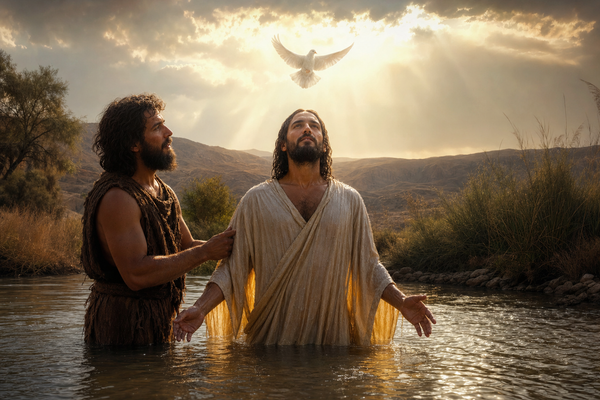
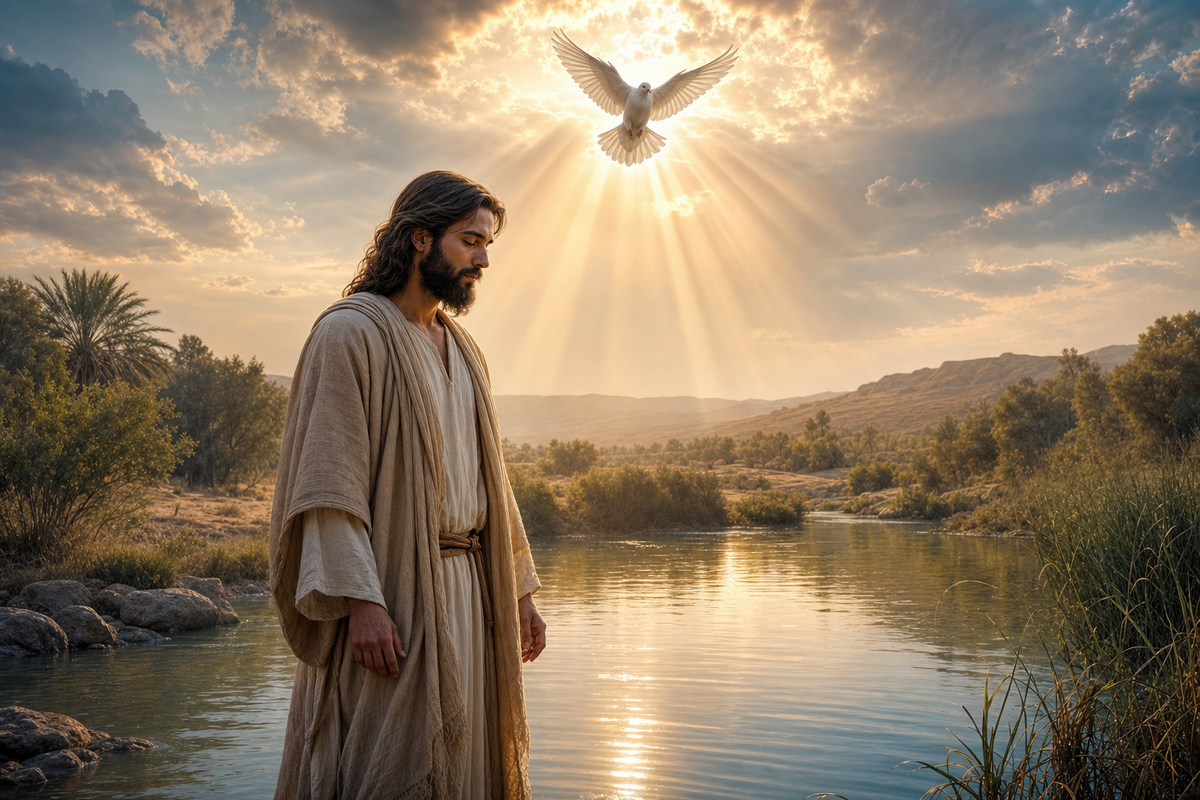
Jesus’ baptism offers one of the clearest pictures. Jesus, the Son, comes up from the water. The Holy Spirit descends upon Him like a dove, and the Father speaks from heaven: “This is my beloved Son, with whom I am well pleased” (Matthew 3:16–17). The Father is not being baptized, and Jesus is not speaking from heaven about Himself. Father, Son, and Spirit are present distinctly and simultaneously.
Jesus later commanded His disciples to make disciples and baptize them “in the name of the Father and of the Son and of the Holy Spirit” (Matthew 28:19). Notice that “name” is singular, while Father, Son, and Holy Spirit are distinguished. This fits the biblical pattern of one God in three persons.
The word “person” can be misunderstood. It does not mean that God consists of three human beings or three separate individuals. It is a way of affirming that the Father, Son, and Holy Spirit are genuinely distinct from one another while fully sharing the one divine being. God is one in essence and three in person.
This is beyond our full comprehension, but it is not a contradiction. Christians are not saying that God is one person and three persons in the same sense. Scripture reveals one “what”—God—and three “whos”—the Father, the Son, and the Holy Spirit.
Jesus Is Fully God
Although Jesus is not the Father, the Bible unmistakably identifies Him as God. This truth appears from the opening lines of John’s Gospel: “In the beginning was the Word, and the Word was with God, and the Word was God” (John 1:1).
John makes two claims at once. The Word was “with God,” showing personal distinction, and the Word “was God,” showing full deity. A few verses later, John identifies the Word: “The Word became flesh and dwelt among us” (John 1:14). The eternal Word is Jesus Christ, who took on a true human nature and lived among us.
John does not say that the Word began to exist when Jesus was born in Bethlehem. The Word was already present “in the beginning.” All creation came into existence through Him: “All things were made through him, and without him was not any thing made that was made” (John 1:3). Jesus belongs on the Creator’s side of the distinction between Creator and creation. He is not a created being.
Thomas confessed this directly after seeing the risen Christ. He said to Jesus, “My Lord and my God!” (John 20:28). Jesus did not correct or rebuke him. Instead, He affirmed Thomas’s faith.
Paul also described Jesus as “our great God and Savior Jesus Christ” (Titus 2:13). Colossians says, “In him the whole fullness of deity dwells bodily” (Colossians 2:9). Hebrews addresses the Son with the words, “Your throne, O God, is forever and ever” (Hebrews 1:8).
Jesus also did things that revealed divine authority. He forgave sins, prompting the scribes to ask, “Who can forgive sins but God alone?” (Mark 2:7). He accepted worship (Matthew 14:33; 28:9). He claimed authority over the Sabbath (Mark 2:28), described Himself as existing before Abraham, and used language echoing God’s divine name: “Before Abraham was, I am” (John 8:58; compare Exodus 3:14).
When Jesus said, “I and the Father are one” (John 10:30), His listeners understood that He was making an extraordinary claim. They prepared to stone Him because, as they said, “You, being a man, make yourself God” (John 10:33).
Yet “I and the Father are one” does not mean that Jesus and the Father are the same person. Jesus says “I” and “the Father,” preserving a personal distinction. Their oneness includes unity of power, work, purpose, and divine nature. The Son gives eternal life, and no one can snatch His people from His hand; likewise, no one can snatch them from the Father’s hand (John 10:27–30). The Father and Son act with one divine authority.
The title “Son of God” does not mean that Jesus was created by God or came into existence after the Father. Human sons begin to exist after their fathers, but God is not a physical being, and biblical language about the eternal Son should not be forced into a human biological framework.
In John 5, Jesus called God His own Father, and His opponents understood Him to be “making himself equal with God” (John 5:18). The title points to His unique relationship with the Father and His sharing in the Father’s divine nature. The Son is eternally the Son; He did not become the Son merely at His human birth.
Jesus Is Not God the Father
The full deity of Jesus must not erase the Bible’s distinction between the Son and the Father. Jesus speaks to His Father as someone other than Himself. He was sent by the Father, loved by the Father, and glorified by the Father. He also promised to return to the Father.
In His prayer before the crucifixion, Jesus said, “Father, glorify me in your own presence with the glory that I had with you before the world existed” (John 17:5). This prayer shows that the Son shared divine glory with the Father before creation, while also existing in a real relationship with Him. Jesus did not simply speak to another role He was playing. The Son was “with” the Father and loved by the Father before the foundation of the world (John 17:24).
The distinction becomes especially vivid in Gethsemane. Facing the cross, Jesus prayed, “Not my will, but yours, be done” (Luke 22:42). This does not mean that the Father and Son are divided in their divine purpose. The Son willingly submits to the Father as the incarnate Messiah, obeying where humanity had rebelled. His prayer nevertheless makes little sense if Jesus and the Father are the same person.
The cross also reveals the relationship between them. The Father sent the Son to be the Savior of the world (1 John 4:14). The Son willingly offered Himself for our sins (Galatians 2:20; Ephesians 5:2). The Father did not become incarnate or die on the cross; the Son did. Yet the Son’s sacrifice was not the punishment of an unwilling third party. The Father and Son acted together in holy love to accomplish redemption.
Jesus said, “Whoever has seen me has seen the Father” (John 14:9). This statement is sometimes taken to mean that Jesus is the Father, but the surrounding passage points in another direction. Jesus also speaks of going to the Father and of the Father dwelling in Him. His meaning is that He perfectly reveals the Father. As the eternal Son, Jesus makes the unseen God known (John 1:18).
Hebrews describes the Son as “the radiance of the glory of God and the exact imprint of his nature” (Hebrews 1:3). Colossians calls Him “the image of the invisible God” (Colossians 1:15). When we look at Jesus, we do not see a lesser or distorted picture of God. We see the perfect revelation of God’s character because the Son fully shares the divine nature.
This helps explain why the New Testament sometimes uses the word “God” specifically for the Father while still affirming that Jesus is God. For example, John 1:1 says that the Word was “with God” and “was God.” In the first phrase, “God” refers personally to the Father; in the second, it describes what the Word truly is. Context helps us determine whether “God” refers to the Father in particular or to the divine nature shared by Father, Son, and Spirit.
So, is God and Jesus Christ the same person? No, if “God” means God the Father. Yes, in the sense that Jesus is fully and eternally God. The most accurate answer is that Jesus is God the Son, distinct from the Father but one with Him in the being of God.
Why Jesus Became Human
Understanding Jesus requires us to hold another biblical truth alongside His deity: Jesus became fully human. The eternal Son did not stop being God. Rather, He took to Himself a real human nature. Christians call this the incarnation.
John writes, “The Word became flesh and dwelt among us” (John 1:14). Paul says that Christ, though existing in the form of God, “emptied himself, by taking the form of a servant, being born in the likeness of men” (Philippians 2:6–7). His “emptying” was not the surrender of His deity. The passage explains it as taking the humble form of a servant and becoming obedient even to death on a cross.
Jesus experienced hunger, thirst, weariness, sorrow, suffering, and death. He grew in wisdom according to His human life (Luke 2:52). He prayed to the Father and lived in faithful dependence upon Him. None of these realities prove that Jesus was merely human. They show that His humanity was genuine, not an appearance or disguise.
The distinction between the Father and Son also helps us understand statements such as “The Father is greater than I” (John 14:28). Jesus spoke as the incarnate Son who had humbled Himself and taken the role of a servant. He was returning to the glory He shared with the Father before the world existed. The verse describes His humble mission and relationship to the Father; it does not overturn the many passages affirming His divine nature.
Jesus had to be truly human to represent us. Humanity had sinned, so the Savior entered our condition, obeyed God perfectly, and bore sin’s judgment in human flesh. Yet He also had to be truly divine. No ordinary creature could bear the full saving work Scripture places upon Him, conquer death, give eternal life, and bring us perfectly to God.
As Paul writes, “There is one God, and there is one mediator between God and men, the man Christ Jesus” (1 Timothy 2:5). Our mediator is not a distant spiritual idea. He is the eternal Son who became human without ceasing to be God. Because of who He is, He can truly bring sinners to the Father.
Why This Truth Matters
The Trinity is not a puzzle included in Christianity merely to test our intelligence. It tells us who God is and helps us understand what He has done for our salvation.
The gospel is the work of the triune God. The Father lovingly sends the Son. The Son willingly becomes human, dies for our sins, and rises from the dead. The Holy Spirit gives new life, unites believers to Christ, and assures them that they are God’s children. Salvation begins in God’s grace, is accomplished by Christ, and is applied to us by the Spirit.
This also means that God’s love did not begin when He created us. Jesus spoke of the love the Father had for Him “before the foundation of the world” (John 17:24). Love eternally exists within God’s own life. When God loves and saves His people, He is acting in harmony with who He has always been.
The deity of Jesus changes how we respond to Him. He is not simply one wise teacher among many. He deserves the faith, obedience, worship, and love that belong to God. His words carry divine authority, His promises are completely trustworthy, and His power to save is not limited.
The distinction between Jesus and the Father also gives depth to prayer. Christians ordinarily pray to the Father, through the Son, in the Holy Spirit. We come confidently to the Father because the Son has reconciled us to Him. Jesus is not persuading a reluctant Father to love us. The Father Himself loved the world and sent His Son (John 3:16), while the Son freely gave Himself for us.
This truth should produce both confidence and humility. We can know God truly because He has revealed Himself in Scripture and supremely in Jesus Christ. Yet we cannot reduce Him to something that fits neatly within human categories. A God we could completely master with our minds would not be the infinite God of the Bible.
When questions remain, the right response is not blind speculation but patient attention to Scripture. Read John 1, John 5, John 10, John 14–17, Colossians 1, Philippians 2, and Hebrews 1 together. Notice both the unity and the distinction. Do not use one verse to silence another. Let the whole witness of Scripture shape your understanding.
The biblical answer is clear even when the mystery is profound: Jesus Christ is not the same person as God the Father, but He is fully God. The Father is God, the Son is God, and the Holy Spirit is God—yet there is only one God.
This is more than a theological formula. The eternal Son came to reveal the Father, bear our sin, defeat death, and bring us into fellowship with God. To know Jesus is not merely to learn facts about Him. It is to trust Him, worship Him, and receive the life He gives.
As you continue studying, ask God to help you see Christ as Scripture presents Him: the eternal Word who became flesh, the beloved Son sent by the Father, the risen Lord, and the only Savior. StudyBible.io can serve as a helpful companion as you explore these passages in their wider biblical context.