What Does the Bible Say About Weed? A Biblical Guide to Marijuana
The Bible does not mention marijuana by name, but it offers clear principles concerning sobriety, self-control, freedom, medical use, legality, and addiction. These truths can help Christians evaluate weed with wisdom, honesty, and grace.
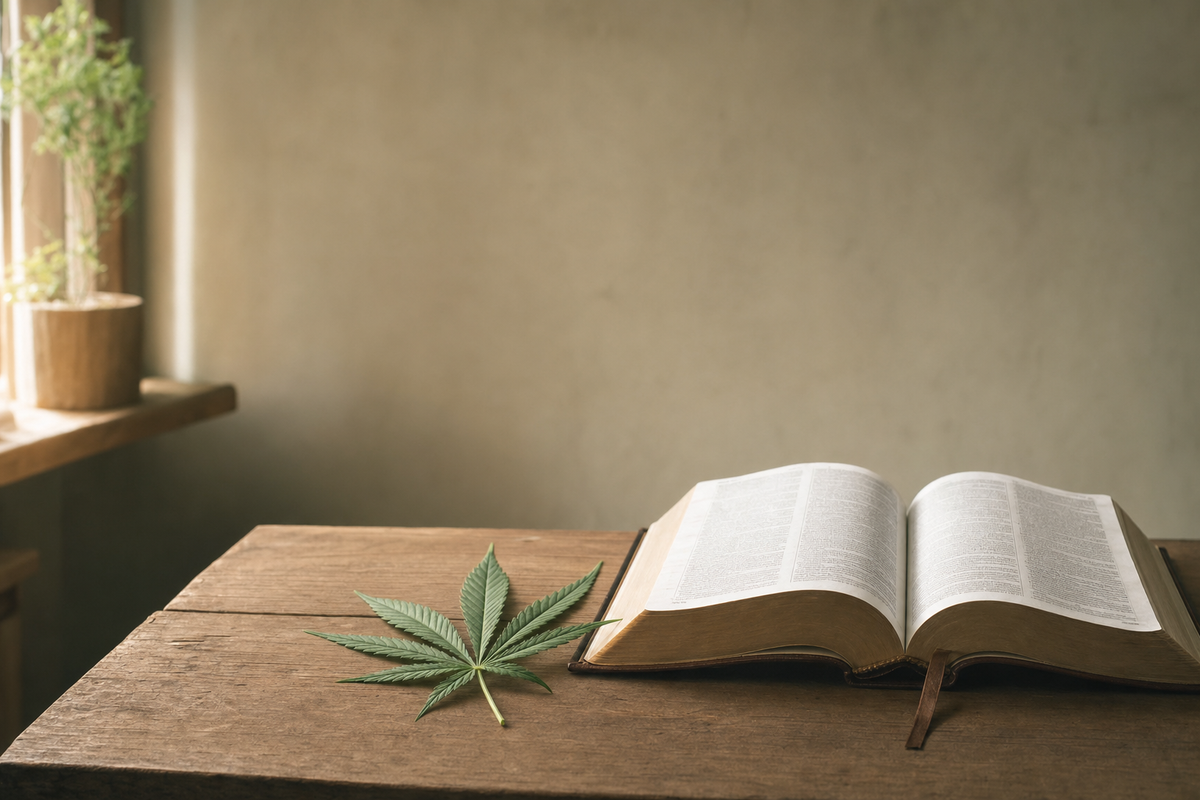
The Bible does not directly mention marijuana, cannabis, THC, or smoking weed. That can make the question feel difficult. If there is no verse saying, “You shall not use marijuana,” how should a Christian decide whether it is right or wrong?
Scripture may not name every modern substance, but it gives us enduring wisdom for evaluating what we put into our bodies, what influences our minds, and what gains control over our desires. When we ask what the Bible says about weed, the deeper questions involve sobriety, self-control, stewardship, Christian freedom, love for others, obedience to the law, and the motives of the heart.
This means the answer requires more than attaching a Bible verse to a personal preference. We need to consider why marijuana is being used, what effect it has, whether it is legal, and whether it helps or hinders a life of faithful obedience to Christ.
Does the Bible Mention Weed?
Cannabis existed in the ancient world, but the Bible never clearly identifies or discusses marijuana as it is cultivated, processed, and consumed today. Some people claim that the Hebrew term kaneh-bosm, used in discussions of aromatic plants, must refer to cannabis. That identification is disputed, however, and most Bible translations render related terms as “calamus” or “aromatic cane.” Even if cannabis had been known in biblical cultures, that would not prove that Scripture approves using it for intoxication.
Others appeal to Genesis 1:29, where God gives seed-bearing plants to humanity for food. Yet this verse is not blanket permission to consume every plant in every possible way. Some plants are harmful, some have medicinal uses only in particular doses, and some can be misused. The goodness of God’s creation does not mean every use of creation is good. Wine comes from grapes, but Scripture still condemns drunkenness. The moral issue often concerns not merely the substance itself but the purpose, amount, effect, and pattern of use.
It is also unhelpful to claim that every use of marijuana is automatically “sorcery” because the Greek word pharmakeia can be associated with potions. In passages such as Galatians 5:20 and Revelation 21:8, the word refers to sorcery and occult practices. Its history does not make every medicine, pharmaceutical, or plant-based treatment an act of witchcraft. Biblical interpretation should not depend on a word association that ignores context.
The honest starting point, then, is that the Bible does not address marijuana by name. But silence about a modern product is not silence about the spiritual questions surrounding its use.
Sobriety, Self-Control, and the Heart
One of Scripture’s clearest principles is the call to remain sober-minded. Peter writes, “Be sober-minded; be watchful” because the devil seeks someone to devour (1 Peter 5:8). Paul likewise urges believers not to sleep spiritually but to remain awake and sober (1 Thessalonians 5:6).
Biblical sobriety means more than having a particular blood-alcohol level. It describes spiritual alertness, sound judgment, readiness to pray, and the ability to respond faithfully to God and others. This is why Scripture repeatedly condemns drunkenness. Ephesians 5:18 says, “Do not get drunk with wine, for that is debauchery, but be filled with the Spirit.” The contrast is between being controlled by an intoxicating substance and living under the gracious influence of the Holy Spirit.
Marijuana is often used specifically to produce a high. Depending on the type, dose, and person, THC can impair attention, memory, reaction time, perception, and judgment. Intentionally seeking significant impairment for pleasure or escape is difficult to reconcile with the Bible’s repeated call to sobriety.
That does not mean every substance that changes how a person feels is sinful. Caffeine affects alertness. Prescription medicine can reduce pain, induce sleep, or affect mood. Anesthesia profoundly alters consciousness during necessary medical care. Scripture’s concern cannot be reduced to the idea that any physical or mental effect is automatically wrong.
The more revealing question is what a person is pursuing. Is marijuana being used responsibly as a legitimate treatment, or is it being used to become intoxicated? Is it helping someone carry out necessary responsibilities, or making that person less present, less watchful, and less loving? Is it addressing suffering wisely, or merely providing a temporary escape from pain that needs truthful attention?
Self-control is part of the fruit produced by the Holy Spirit (Galatians 5:22–23). A habit that regularly weakens self-control, feeds impulsiveness, or becomes the primary way someone handles stress deserves serious spiritual examination. The question is not simply, “Can I use weed?” but, “What is this doing to my heart, mind, relationships, and responsiveness to God?”
Christian Freedom Has Boundaries
The New Testament teaches that believers possess real freedom in Christ, but it never presents freedom as permission to be careless. Paul writes, “All things are lawful for me,” but not all things are helpful. “All things are lawful for me,” but I will not be dominated by anything (1 Corinthians 6:12).
Those two tests—helpfulness and mastery—are especially relevant to marijuana. Something may be legal without being spiritually helpful. A person may insist that occasional use is voluntary while gradually arranging evenings, friendships, finances, and emotions around the next opportunity to get high. If a substance begins to control choices, moods, or priorities, Christian freedom is being replaced by bondage.
Paul gives another important principle in 1 Corinthians 10:31: “Whether you eat or drink, or whatever you do, do all to the glory of God.” This does not mean Christians must attach religious language to every ordinary decision. It means all of life belongs to God. We should be able to receive his gifts with gratitude and use them without hiding, deception, idolatry, or disregard for others.
The body also matters because believers belong to Christ. First Corinthians 6:19–20 says, “Your body is a temple of the Holy Spirit within you” and therefore calls Christians to glorify God in their bodies. The immediate context concerns sexual immorality, so the passage should not be turned into a simplistic rule that every unhealthy choice is equally sinful. Still, it establishes a larger truth: our bodies are not possessions to use without reference to God. We have been bought with a price.
Love for others must shape the decision as well. Marijuana use can affect family trust, parenting, work, driving, finances, and a believer’s influence on someone vulnerable to addiction. Romans 14 teaches Christians not to use their liberty in ways that encourage another person to violate conscience or return to destructive behavior. This does not mean every disapproving reaction gives someone authority over our decisions. It means love willingly limits freedom when our behavior could draw another person toward sin.
Conscience is important, but conscience is not infallible. One person may feel guilty about something Scripture permits; another may feel comfortable with something Scripture warns against. A Christian conscience must be continually formed by God’s Word. We should neither condemn others where Scripture allows genuine freedom nor use freedom to excuse intoxication, irresponsibility, or enslavement.
Legality matters too. Romans 13:1 tells believers to be subject to governing authorities. Laws concerning marijuana vary widely by country, state, and locality. Where possession or use is illegal, a desire to get high does not provide a biblical reason to disobey the law. Even where recreational or medical use is legal, Christians must still obey restrictions involving age, driving, public use, employment, and possession. Legal does not always mean wise, but knowingly illegal conduct is an additional moral concern.
What About Medical Marijuana?
Medical use should be distinguished from recreational intoxication. Scripture does not oppose medicine simply because it affects the body or mind. Paul advised Timothy to use a little wine for his stomach and frequent ailments (1 Timothy 5:23), showing that a substance capable of misuse could also have a limited therapeutic purpose.
In the same way, cannabis-derived treatments may be recommended for certain medical conditions. Some products contain THC and can impair the user, while others contain cannabidiol, commonly called CBD, and may not produce a high. Products, dosages, risks, and legal standards differ significantly, so “medical marijuana” is not one uniform category.
Using a substance under responsible medical guidance to reduce severe pain, nausea, muscle spasms, or another legitimate symptom is morally different from using it primarily to escape reality or chase intoxication. Motive is not the only consideration, but it matters. Dosage, side effects, dependency, legal status, available alternatives, and the effect on daily responsibilities should also be considered.
The label “medical” should not become an automatic justification. Prescription medications can also be misused, and a treatment may be legal without being appropriate for every person. At the same time, Christians should not shame those who receive legitimate care simply because a treatment involves cannabis. Wisdom avoids both careless approval and fearful condemnation.
Someone considering medical marijuana should seek qualified medical counsel, understand the applicable laws, and pray honestly about the benefits and risks. It can also be wise to speak with a mature pastor or trusted believer who will respond with biblical clarity rather than suspicion or easy reassurance.
Choosing a Faithful Path
For many people, the most important issue is not theoretical. Weed may already be part of daily life. It may be used to relax, sleep, fit in socially, numb anxiety, avoid painful memories, or make ordinary life feel more enjoyable. Those desires should be brought into the light before God.
Ask what you believe marijuana is giving you. Is it peace? Belonging? Relief? Courage? Rest? None of those longings is trivial, but a substance cannot bear the weight of being a savior. Jesus invites burdened people to come to him, not because every struggle disappears immediately, but because true rest and restoration are found under his gracious rule (Matthew 11:28–30).
If marijuana has become difficult to stop, honesty is a vital first step. Proverbs 28:13 says, “Whoever conceals his transgressions will not prosper, but he who confesses and forsakes them will obtain mercy.” Confession is not an invitation to humiliation. It is a movement out of secrecy and toward mercy. A pastor, doctor, counselor, recovery group, or trusted Christian can help address both the habit and the pain beneath it.
A person who has misused marijuana is not beyond Christ’s forgiveness. The gospel does not say that we clean ourselves up well enough to earn God’s acceptance. It announces that Jesus died for sinners and rose again, offering pardon and new life to all who trust him. Grace does not romanticize bondage, but it does make repentance possible. In Christ, failure does not have to be the final word.
For a Christian trying to make a wise decision, several questions deserve prayerful attention. Am I seeking intoxication or legitimate care? Does this weaken my judgment or self-control? Am I being mastered by it? Is it legal? Does it interfere with loving God, serving others, fulfilling responsibilities, or remaining spiritually watchful? Can I honestly thank God for this use, or do I feel the need to hide and defend it? Would abstaining reveal that it has more power over me than I realized?
The Bible does not give a verse that names marijuana, but its direction is still meaningful. Recreationally pursuing a high raises serious conflicts with sobriety, self-control, stewardship, and freedom from mastery. Medical use may fall into a different moral category, but it still calls for wisdom, restraint, lawful conduct, and honest evaluation.
Ultimately, the goal is not merely to determine how close we can come to a moral boundary. The Christian life is about becoming more like Christ. We are called to offer our bodies to God, renew our minds through truth, love our neighbors, and refuse anything that competes for mastery of the heart. As Romans 12:1–2 teaches, faithful worship involves presenting our bodies to God and allowing him to transform us through the renewal of our minds.
If you are still uncertain, spend time with the passages mentioned here and invite God to search your motives. StudyBible.io can help you explore these verses in context as you seek wisdom with an open Bible and an honest heart.