
What Does the Bible Say About Eating Pork? Is It a Sin for Christians?
The Old Testament prohibited Israel from eating pork, but the New Testament teaches that food does not make Christians spiritually unclean. In Christ, believers may eat or abstain with faith, gratitude, humility, and love.
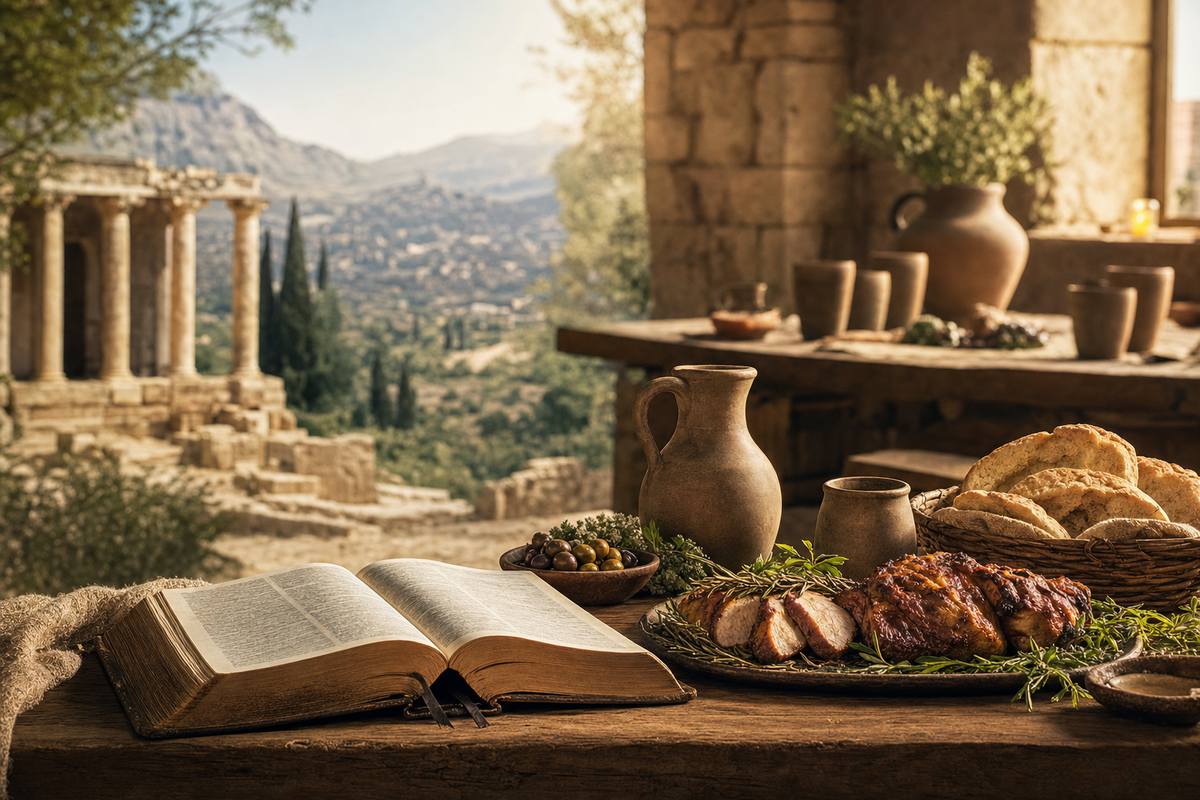
The Bible clearly prohibited the Israelites from eating pork under the Old Testament law. Yet the New Testament teaches that Christians are not made spiritually unclean by particular foods. Because of Christ’s fulfillment of the law and the establishment of the new covenant, eating pork is not inherently sinful for a Christian.
That simple answer is important, but it can also raise deeper questions. Why did God forbid pork in the first place? Did Jesus change the command? What about Peter’s vision in Acts 10? And how should Christians respond to believers who still choose not to eat it?
To understand what the Bible says about eating pork, we need to follow the subject through the whole story of Scripture rather than building our conclusion from one isolated verse.
The Old Testament Prohibition
The clearest Old Testament teaching about pork appears in Leviticus 11. God gave Israel specific instructions distinguishing between animals that were clean and those that were unclean. Land animals suitable for food had to both divide the hoof and chew the cud. A pig met only one of those conditions:
The pig, because it parts the hoof and is cloven-footed but does not chew the cud, is unclean to you (Leviticus 11:7).
The Israelites were not to eat its meat or touch its carcass. Deuteronomy 14:8 repeats the same command. Therefore, under the covenant God made with Israel through Moses, eating pork was forbidden.
The Bible does not present this prohibition merely as ancient nutritional advice. Although avoiding certain foods may have offered practical health benefits in the ancient world, Scripture’s stated emphasis is holiness. Immediately after listing the clean and unclean animals, God declared, You shall be holy, for I am holy (Leviticus 11:44).
These food laws taught Israel that belonging to a holy God affected every part of life, including ordinary meals. They also distinguished Israel from the surrounding nations. Deuteronomy introduces its food instructions by reminding the people that they were holy to the Lord and chosen as his treasured possession (Deuteronomy 14:2–3).
This does not mean pigs were morally evil or that God had created something inherently corrupt. The distinction concerned what Israel could receive as ceremonially clean under that covenant. An unclean animal was not sinful in the way that murder, adultery, or idolatry was sinful. Rather, eating it made an Israelite ceremonially unclean and represented disobedience to a command God had specifically given his covenant people.
The wider biblical story also shows that this restriction was not presented as a universal command for every person in every age. After the flood, God told Noah, Every moving thing that lives shall be food for you (Genesis 9:3). Scripture already recognized distinctions between clean and unclean animals in Noah’s time, but Genesis does not give humanity the same detailed food code later given to Israel at Sinai.
Some readers point to Isaiah 65:4 and 66:17, where eating pig’s flesh appears in descriptions of people facing judgment. Those passages should be taken seriously, but they describe rebellious people under the Old Testament order, often in connection with idolatrous and defiling practices. They confirm that disregarding God’s command was sinful for Israel; they do not settle whether Christians living under the new covenant remain bound by that command.
Jesus and True Defilement
Jesus was born under the law and faithfully obeyed it (Galatians 4:4; Hebrews 4:15). Scripture never records Jesus eating pork, and as a faithful Jewish man, he would have observed the food laws during his earthly ministry. Yet Jesus also revealed that the laws concerning ceremonial uncleanness pointed beyond food to a much deeper human problem.
In Mark 7, the Pharisees and scribes criticized Jesus’ disciples for eating with ceremonially unwashed hands. Jesus responded by drawing attention away from external rituals and toward the condition of the heart:
There is nothing outside a person that by going into him can defile him, but the things that come out of a person are what defile him (Mark 7:15).
Jesus then explained that food enters the stomach rather than the heart. Mark adds the significant conclusion, Thus he declared all foods clean (Mark 7:19). Matthew records the same central teaching: It is not what goes into the mouth that defiles a person, but what comes out of the mouth (Matthew 15:11).
Jesus was not suggesting that God’s earlier commands had been mistaken. He came not to abolish the Law and the Prophets but to fulfill them (Matthew 5:17). The food laws served God’s purpose within the old covenant, teaching holiness and separation. Jesus brought that purpose to its fulfillment and exposed the deeper uncleanness those outward distinctions could not remove.
A person’s greatest problem is not pork, shellfish, or food touched by unwashed hands. It is a heart from which come evil thoughts, sexual immorality, theft, murder, adultery, coveting, deceit, pride, and other sins (Mark 7:21–23). Food regulations could identify ceremonial uncleanness, but they could not cleanse a sinful heart. Only Christ can do that.
This is why the Christian answer cannot be reduced to saying that one menu replaced another. The gospel announces something far greater: through Jesus’ sacrificial death and resurrection, sinners can be forgiven, cleansed, and brought near to God. External food boundaries no longer define who belongs among God’s covenant people. Faith in Christ does.
The New Covenant Table
The book of Acts shows the early church learning to live out this truth. In Acts 10, the apostle Peter received a vision of a sheet containing various animals. A voice told him to rise, kill, and eat. Peter objected that he had never eaten anything common or unclean. The voice replied, What God has made clean, do not call common (Acts 10:15).
The vision occurred three times, but its primary message concerned more than Peter’s diet. God was preparing him to enter the home of Cornelius, a Gentile, and preach the gospel. Peter later explained, God has shown me that I should not call any person common or unclean (Acts 10:28).
Peter’s vision should not be reduced to a lesson about food. It announced that Gentiles who trusted in Christ were not spiritually inferior and did not have to become Jews before entering God’s family. At the same time, God deliberately used clean and unclean food as the vision’s imagery. The removal of the old food boundary and the welcome of Gentile believers belong to the same new-covenant reality.
This issue became especially important in Acts 15. Some people were teaching that Gentile believers had to be circumcised and keep the law of Moses to be saved. The apostles rejected that teaching. Salvation came through the grace of the Lord Jesus rather than through taking on Israel’s covenant identity markers (Acts 15:11).
The Jerusalem Council did instruct Gentile Christians to abstain from things polluted by idols, sexual immorality, meat from strangled animals, and blood. These instructions guarded believers from idolatry and immorality while also making table fellowship possible between Jewish and Gentile Christians. They did not place Gentiles under the full dietary system of Leviticus, and pork itself was not included as a prohibited food.
Paul’s letters make the new-covenant position even clearer. He told the Colossians, Let no one pass judgment on you in questions of food and drink (Colossians 2:16). Such things were a shadow, while the substance belongs to Christ. He also warned Timothy about people who would forbid foods that God created to be received with thanksgiving:
Everything created by God is good, and nothing is to be rejected if it is received with thanksgiving (1 Timothy 4:4).
The Old Testament food laws remain part of inspired Scripture. They teach us about God’s holiness, Israel’s calling, the seriousness of uncleanness, and our need for cleansing. But Christians do not obey those passages by reconstructing Israel’s entire food code. We read them through their fulfillment in Jesus and allow them to lead us to the holiness he provides and commands under the new covenant.
Freedom Guided by Love and Conscience
The New Testament gives Christians freedom to eat pork, but biblical freedom is never permission to become careless, proud, or insensitive. The question is not only whether a particular food is allowed. It is also whether we receive it with gratitude, act in faith, and love the people around us.
Romans 14 addresses disagreements among believers over food and sacred days. Some Christians felt free to eat broadly, while others restricted their diets. Paul did not command the first group to adopt the restrictions of the second, nor did he permit the first group to mock them. He wrote, Let not the one who eats despise the one who abstains, and let not the one who abstains pass judgment on the one who eats, for God has welcomed him (Romans 14:3).
Paul could say, Nothing is unclean in itself (Romans 14:14), while also recognizing that eating could become wrong in a particular situation. If someone believes an action is sinful but proceeds anyway, that person is acting against conscience rather than from faith. Paul concludes, Whatever does not proceed from faith is sin (Romans 14:23).
Conscience is important, but it is not infallible. It should be patiently shaped by God’s Word. A Christian who has always believed pork is forbidden may need time to understand the freedom taught in the New Testament. That person should not be pressured into eating it merely to prove a point. Likewise, someone who abstains should not turn a personal conviction into a requirement for salvation or a standard by which every Christian is judged.
Some Jewish believers in Jesus may avoid pork as part of their cultural heritage. Other Christians may abstain because of health concerns, personal preference, or a desire to follow a certain diet. Scripture leaves room for those choices. Permission to eat pork is not a command to eat it. The problem begins when dietary practice becomes a source of spiritual pride, division, condemnation, or misplaced confidence before God.
Love may also lead a Christian to limit personal freedom in certain settings. If serving or eating pork would unnecessarily wound another believer’s conscience or create a serious barrier to sharing the gospel, insisting on one’s rights may not be the most Christlike choice. Paul wrote, The kingdom of God is not a matter of eating and drinking but of righteousness and peace and joy in the Holy Spirit (Romans 14:17).
This does not mean another person’s concern controls every Christian meal. It means believers value one another more than food. Christ purchased the brother or sister at the table. A meal should not become an excuse for contempt, quarrelling, or spiritual superiority.
Health and stewardship also deserve wise consideration. Pork, like many foods, can be prepared or consumed in ways that are more or less healthy. Christians should practice self-control, avoid gluttony, and care responsibly for their bodies. But the Bible does not teach that pork is spiritually defiling because of its nutritional profile. Medical advice and personal dietary needs should not be confused with a universal command from God.
Eating Pork with Faith and Gratitude
So, is it a sin for a Christian to eat pork? No, eating pork is not inherently sinful for someone living under the new covenant. Jesus taught that food does not enter and defile the heart, the apostles did not require Gentile Christians to keep Israel’s dietary law, and Paul taught believers to receive God’s provision with thanksgiving.
Eating pork could still be connected with sin if it involved gluttony, deliberate harm, idolatry, disregard for conscience, or an unloving use of freedom. But those concerns are not unique to pork. They apply to the way Christians approach all food and all areas of personal liberty.
The Bible’s teaching calls both those who eat and those who abstain to humility. The Christian who eats pork has no reason to boast, because freedom is a gift of grace. The Christian who abstains has no reason to condemn, because dietary restraint does not make anyone righteous before God. Paul summarizes the proper posture simply: The one who eats, eats in honor of the Lord, since he gives thanks to God, while the one who abstains, abstains in honor of the Lord and gives thanks to God (Romans 14:6).
The deeper issue is not what sits on the plate but who rules the heart. Food cannot reconcile us to God, and avoiding a food cannot earn salvation. We are made clean through Jesus Christ, who bore our sin and brings all who trust him into a new covenant relationship with God.
When deciding whether to eat pork, Christians can ask whether they understand the relevant Scriptures, whether they can act with a clear and instructed conscience, whether their choice reflects gratitude, and whether it serves love. That approach honors both the freedom Christ gives and the holiness to which he calls his people.
If you want to explore these passages more closely, StudyBible.io can serve as a helpful companion as you compare contexts, trace themes, and study how the whole Bible points to Christ.