Is Cremation Against the Bible? What Scripture Really Says
The Bible does not explicitly forbid cremation, although burial is its most common and symbolically rich pattern. Christian hope rests in Christ’s resurrection, not in the physical condition of a person’s remains.

For Christians facing the death of a loved one—or planning for their own death—the choice between burial and cremation can feel deeply spiritual. Some believers worry that cremation is disrespectful to the body, connected with pagan customs, or incompatible with the future resurrection. Others see it as a practical choice that does not affect a person’s standing before God.
So, is cremation against the Bible? Scripture does not explicitly command or forbid cremation. Burial is the most common and honored pattern found throughout the Bible, and it carries rich symbolism. Yet the Bible never teaches that a cremated body cannot be resurrected or that choosing cremation is inherently sinful.
The better question is not simply whether cremation is permitted, but how Christians can approach death, the body, and funeral decisions in a way that reflects reverence for God, love for the deceased, and hope in the resurrection.
Does the Bible Forbid Cremation?
There is no verse that says, “You shall not cremate a body.” The Old Testament contains detailed commands concerning worship, sacrifice, cleanliness, burial, and care for the dead, but it never establishes a universal prohibition against cremation. The New Testament likewise gives no command requiring Christians to be buried rather than cremated.
That silence matters, but it should be handled carefully. It does not mean that funeral choices are spiritually meaningless. Scripture teaches that the human body is God’s creation and should be treated with dignity. Human beings are made in the image of God (Genesis 1:26–27), and believers’ bodies belong to the Lord (1 Corinthians 6:19–20). Although Paul’s words in 1 Corinthians primarily address how Christians live in their bodies, they establish an important principle: our bodies are not worthless shells.
At the same time, the physical condition of a person’s remains does not determine that person’s eternal destiny. Salvation is received by grace through faith in Jesus Christ, not through a particular funeral practice. Cremation does not separate someone from Christ, and burial does not make someone righteous before God.
This means cremation should not be treated as automatically sinful. A Christian may still prefer burial because of its biblical pattern and symbolism, but that is different from claiming that God has issued a command He has not given.
Burial Is the Biblical Pattern
Although Scripture does not prohibit cremation, burial is clearly the customary pattern among God’s people. Abraham purchased a burial place for Sarah and later was buried there himself (Genesis 23:1–20; 25:9–10). Isaac, Rebekah, Jacob, and Leah were also buried in the family tomb (Genesis 49:29–33). Joseph’s body was embalmed and placed in a coffin in Egypt, and his bones were eventually carried into the promised land (Genesis 50:25–26; Joshua 24:32).
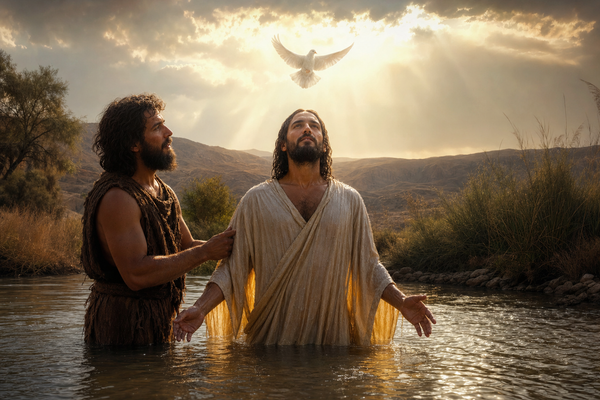
Burial continued to be the normal Jewish practice in the New Testament. John the Baptist’s disciples buried his body after his execution (Matthew 14:12). Lazarus was placed in a tomb (John 11:17–44). Most importantly, Jesus was lovingly wrapped in linen and laid in a new tomb after His crucifixion (John 19:38–42).
These examples help explain why Christians throughout history have often preferred burial. It treats the body as something entrusted to the earth while awaiting resurrection. Paul uses similar imagery when he compares the resurrection body to a seed that is sown:
“What is sown is perishable; what is raised is imperishable” (1 Corinthians 15:42).
Burial can therefore serve as a visible confession of Christian hope. The body is laid to rest, but death will not have the final word. This symbolism is meaningful, and believers should not dismiss it lightly.
However, a biblical pattern is not always the same as a binding command. People in the ancient world often buried their dead because that was the accepted practice of their community, as well as an expression of honor and family identity. Scripture records these burials approvingly, but it does not declare that every believer in every place and circumstance must follow the same method.
Jesus’ burial is central to the gospel, as Paul emphasizes in 1 Corinthians 15:3–4. Yet Jesus was not buried because burial is what saves human beings. His burial confirmed the reality of His death and prepared the setting for the historical reality of His resurrection. Christians are saved by His death and resurrection, not by reproducing every detail of His burial.
What About Bodies Being Burned in Scripture?
Some readers point to biblical accounts in which bodies or bones were burned and conclude that cremation must represent God’s judgment. Fire does sometimes symbolize judgment in Scripture, but the context of each passage must guide our interpretation.
After King Saul and his sons died in battle, the Philistines abused and displayed their bodies. Courageous men from Jabesh-gilead recovered the bodies, burned them, and then buried the bones (1 Samuel 31:8–13). The burning was unusual in Israel, but the rescuers’ actions are presented as honorable. David later praised them for the loyal kindness they had shown to Saul (2 Samuel 2:4–6). The passage does not describe an ordinary modern cremation, yet it demonstrates that burning a body was not automatically treated as an unforgivable offense.
Other passages connect burning with punishment or disgrace. After Achan’s sin brought judgment upon Israel, he and all that belonged to him were burned following his execution (Joshua 7:25). Amos 2:1 condemns Moab because the people burned the bones of the king of Edom “to lime.” That act appears to have been a form of hostile desecration and vengeance, not a respectful funeral practice.
The moral issue in these passages is therefore larger than the presence of fire. The context may involve divine judgment, hatred, humiliation, or contempt for the dead. A modern cremation chosen with care and accompanied by Christian worship is not morally identical to burning someone’s remains as an act of desecration.
It is also unhelpful to argue that cremation is sinful merely because nonbiblical religions have practiced it. Many ordinary practices have appeared in pagan cultures without being inherently pagan. The decisive questions are what Scripture teaches, what the practice means in a particular setting, and what motives are guiding the people involved.
Cremation and the Resurrection
One of the deepest concerns about cremation is whether God can resurrect a body that has been reduced to ashes. Scripture gives a clear and comforting answer: the resurrection depends on God’s power, not on the preservation of a corpse.
From the beginning, the Bible acknowledges that the human body returns to the elements from which it was formed. God told Adam, “For you are dust, and to dust you shall return” (Genesis 3:19). Ecclesiastes similarly says that “the dust returns to the earth as it was, and the spirit returns to God who gave it” (Ecclesiastes 12:7).
Buried bodies also decompose. Over time, they return to dust just as surely as cremated bodies become ashes. Many believers have died at sea, in fires, during wars, through persecution, or in circumstances where no recoverable body remained. None of this places them beyond the reach of their Creator.
Revelation 20:13 says that the sea will give up the dead who are in it. The point is not that every particle has remained physically intact. The point is that no place, disaster, or form of death can hide a person from God’s authority.
In 1 Corinthians 15, Paul explains that the resurrection body will have both continuity with and transformation beyond the body that died. He writes:
“It is sown a natural body; it is raised a spiritual body” (1 Corinthians 15:44).
“Spiritual body” does not mean an immaterial ghost. Paul is describing a real body fully transformed and empowered by the Holy Spirit. What was perishable will be raised imperishable; what was weak will be raised in power (1 Corinthians 15:42–43). Philippians 3:20–21 adds that Christ will transform our lowly bodies to be like His glorious body.
The God who created humanity from dust does not need an embalmed or intact body in order to raise the dead. Cremation cannot prevent resurrection, just as burial cannot guarantee salvation. Everyone who belongs to Christ will be raised because Jesus Himself conquered death.
This truth offers particular comfort to those who have already cremated a loved one and now fear they made an irreversible spiritual mistake. There is no biblical reason to believe that cremation has harmed that person’s soul or placed the body beyond God’s power. Christian hope rests in Christ, not in the condition of human remains.
Choosing With Faith, Wisdom, and Love
Because the Bible does not directly command one method, Christians have room to make this decision with prayer and wisdom. That freedom should not lead to carelessness, but neither should it become a source of fear or judgment.
A helpful place to begin is with motive. Is the choice being made thoughtfully, with respect for the person who died? Does it reflect Christian hope rather than contempt for the body? Are family members being treated with patience and compassion? Is the decision being driven by superstition, social pressure, or unnecessary guilt?
For some families, burial offers the clearest expression of their beliefs. The act of placing the body in the ground may beautifully reflect the biblical image of sowing in hope and awaiting resurrection. A gravesite can also provide a meaningful place for remembrance and mourning.
For others, cremation may be chosen because of financial limitations, local laws, available land, family circumstances, transportation needs, or the deceased person’s stated wishes. Cost is not an unspiritual consideration. Scripture calls believers to wise stewardship and care for surviving family members. An expensive funeral is not necessarily more honoring to God than a simple one.
Christians should also consider how cremated remains are handled. The Bible does not give instructions about storing or scattering ashes, so believers should avoid creating rules that Scripture does not establish. Still, the principle of dignity remains. Ashes should not be treated superstitiously, as though they contain spiritual power, nor casually, as though the person’s embodied life had no value.
A Christian funeral or memorial service can remain thoroughly biblical whether the body is buried or cremated. The service can thank God for the person’s life, allow space for honest grief, proclaim the gospel, and direct attention toward the resurrection of Jesus. Paul did not tell grieving Christians to avoid sorrow altogether. He told them not to grieve “as others do who have no hope” (1 Thessalonians 4:13). Christian grief is real grief, but it is grief illuminated by hope.
Believers may reach different conclusions without questioning one another’s faithfulness. Romans 14 addresses disputed matters rather than cremation specifically, but its principles are useful: decisions should be made before the Lord, with a clear conscience, without contempt or condemnation. Someone who chooses burial should not assume every cremation is rebellion against God. Someone who chooses cremation should not ridicule the biblical symbolism or personal importance of burial.
When disagreement arises within a family, love matters more than winning the argument. Listening carefully, reviewing the deceased person’s wishes, seeking pastoral counsel, and praying together can prevent a painful season from becoming more divided. A funeral decision should not be used to measure another believer’s love for God.
Our Hope Is Greater Than the Grave
Cremation is not explicitly against the Bible. Burial is the dominant biblical pattern and carries profound Christian symbolism, but Scripture does not teach that cremation is inherently sinful or that it interferes with resurrection.
The body should be treated with honor because God created it. Death should be faced honestly because it is an enemy brought into the world through sin. Yet Christians do not need to face funeral decisions with terror. Jesus entered death, was buried, and rose victorious. Everyone united to Him by faith shares in that living hope.
Whether a body returns to dust slowly through burial or quickly through cremation, God has not lost His claim upon the person. Christ declared, “I am the resurrection and the life. Whoever believes in me, though he die, yet shall he live” (John 11:25).
If you are making this decision now, return to Scripture, pray for wisdom, consider the needs of those involved, and act with a conscience shaped by faith and love. The final hope of the Christian is not an untouched grave, but an empty one.
For deeper study of the passages connected with death, burial, and resurrection, StudyBible.io can help you explore Scripture in context as you seek clarity and comfort.